
❌ Daniel Amen’s ADHD mistruths on the Jay Shetty Podcast
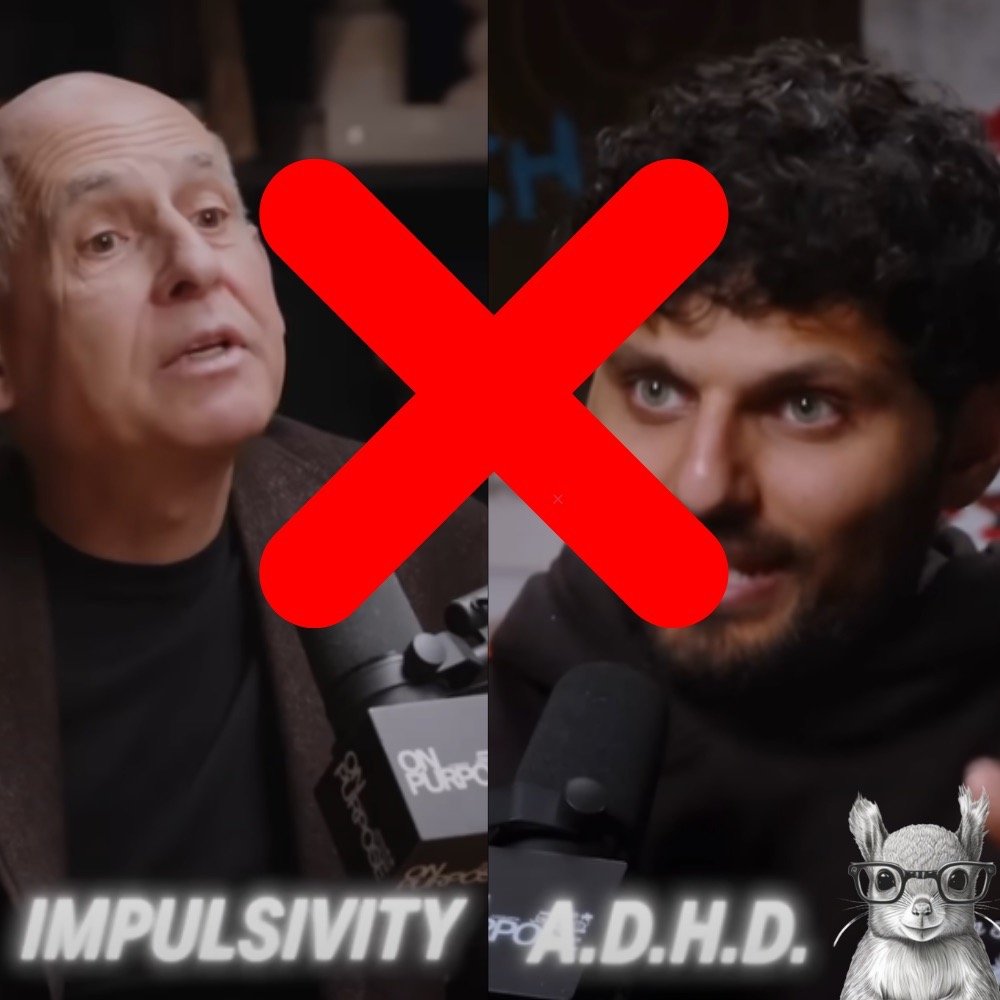
Jay Shetty Podcast interview with Dr. Daniel Amen
Please share this article to help correct the potentially harmful mistruths about ADHD.
I watched the Jay Shetty Podcast interview with Dr. Daniel Amen, #1 BRAIN EXPERT: “If I Had ADHD, This is EXACTLY What I’d Do!” #1 Trick to Focus NOW (pt.1) so you don’t have to. Here are the inaccuracies that Dr. Daniel Amen said and what we should do about them.
❌ [0:47] "Eliminate gluten, dairy, corn, soy, dyes, and sweeteners — 70% of kids lost their ADHD."
→ This misrepresents a Lancet study. Only some kids with food sensitivities improved. Not 70% overall.
❌ [0:54, 4:59] SSRIs like Lexapro make people “more ADD, but happier.”
→ Oversimplified and misleading. SSRIs affect serotonin, not the dopamine systems directly linked to ADHD symptoms. No evidence shows SSRIs make ADHD worse.
❌ [37:48] “Gluten and dairy turn into gluteomorphins and space you out like opioids.”
→ This is a fringe theory. There’s no solid evidence linking gluten or dairy to ADHD symptoms in most people.
❌ [10:02, 21:46] “ADHD is purely genetic—you’re born with it.”
→ Not entirely true. ADHD is highly heritable, but environmental factors and brain development also contribute. Many are diagnosed in adulthood.
❌ [32:28] “Psilocybin has increased ER psychosis visits by 300%.”
→ No credible study shows this. In clinical settings, psilocybin shows therapeutic promise for some mental health conditions.
Five reasons why Dr. Daniel Amen spreads misinformation in the interview with Jay Shetty.
-
Dr. Daniel Amen Has a Commercial Incentive
Amen runs a for-profit chain of clinics and has published bestselling books and courses. His branding often emphasizes:
- "Brain scans (SPECT) = revolutionary diagnostics"
- Supplements, diets, and lifestyle changes over standard meds
Many scientists argue that he markets hope rather than validated science.
2. Dr. Amen Often Overstates Preliminary or Fringe Research
He references studies or theories (like elimination diets or gluteomorphins) that are:
- Based on small sample sizes
- Not replicated or supported by major health organizations
- Popular in alternative or integrative medicine circles
3. Amen’s Use of SPECT Scans Is Not Evidence-Based
Mainstream psychiatry does not use SPECT scans to diagnose ADHD or depression, because:
- There’s no reliable biomarker for these conditions via scans
- His interpretation of images is not standardized and often subjective
4. He’s a Convincing Communicator, Not Just a Scientist
He’s skilled at storytelling and uses:
- Personal anecdotes
- Emotional case studies
- Simplified metaphors (“your brain is like a computer,” “dopamine is like love”)
These can make complex issues feel understandable—but they can also oversimplify or distort facts.
5. He Might Truly Believe What He’s Saying
He may not be intentionally deceptive. If his clinical experience seems to support certain patterns (like diet changes), he might overgeneralize them even without robust evidence.
Bottom Line and What to Do About It…
Leave a comment on the YouTube video to help shed light on these mistruths that could cause damage (a sample is below), follow and amplify Dr. Russell Barkley’s YouTube channel instead; he’s now retired and has no financial incentives, plus he’s among the most trusted medical professionals on the topic of ADHD science and treatment.
You may also wish to respectfully share this article with the podcast host, Jay Shetty, expressing your concerns about his platforming individuals who may do more harm than good to those with ADHD. Request a retraction and correction.
Dr. Amen's approach is controversial, and many of his claims have been debunked or heavily disputed by neurologists, psychiatrists, and researchers.
Listen to the podcast
Interviews with ADHD experts and late-diagnosed adults, new every Wednesday.
Browse episodes